Think in dependencies
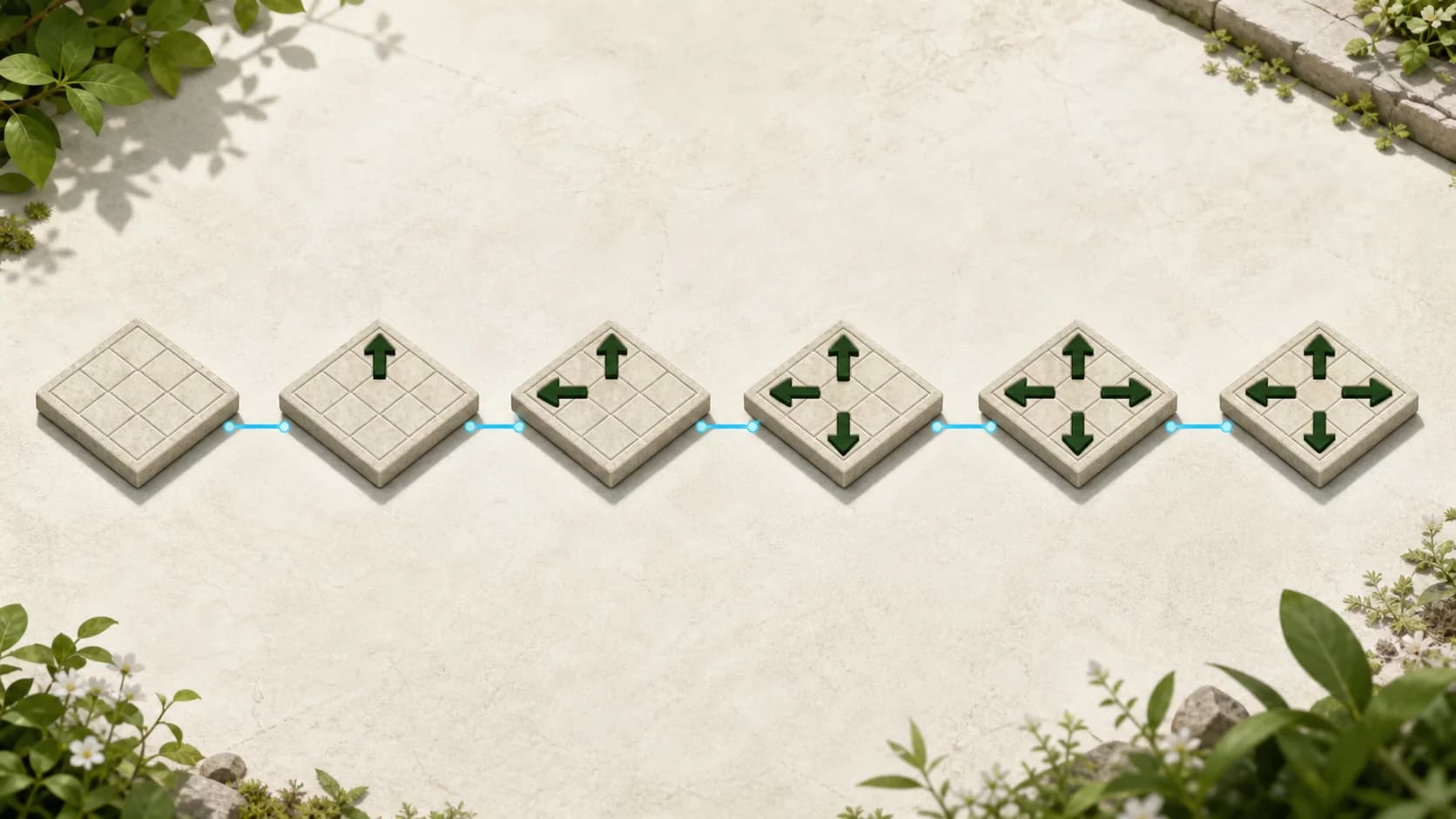
On a difficult board, many pieces are blocked on purpose. Represent the position as simple statements: A waits for B, B waits for C, and C can leave. The playable end of that chain is your next move.
You do not need to draw a full map. Following one chain until it reaches a clear route is usually enough.
Find the bottleneck
A bottleneck blocks several other routes. Long snake pieces and central heavy arrows often become bottlenecks because they occupy or control more space.
Prefer a safe move that removes a bottleneck over one that opens only an isolated corner. It usually creates more options for the following turn.
Compare two safe moves
Sometimes more than one arrow can leave. Both are valid, but one may reveal more of the board. Count the lines each move changes and check whether it releases a special piece.
The game is generated to stay solvable, so a safe exit will not create an impossible state. Your choice mainly affects how easy the remaining structure is to read.
Use walls as graph boundaries
Permanent walls split the board into smaller regions. Solve the dependencies inside one region, then connect it to the routes that cross around the wall.
This approach reduces visual noise and prevents you from following a route through a square that can never open.
Recover when you feel stuck
Return to the edges and rebuild one dependency chain from scratch. Check both ends of every bi-directional arrow and confirm the true head of each snake. Most stuck moments come from an assumed blocker rather than a missing move.